My Data Science Book with Apress Springer Nature is finally available

Thanks to Allah!
Learn Data Science Using SAS Studio: A Quick-Start Guide
(Published By Apress Springer Nature)
You can buy it at:
Paper copy at Amazon.com
https://amzn.to/3lh00JU
Digital copy at Kindle Store:
https://amzn.to/3d44DEf

Do you want to create data analysis reports without writing a line of code? This book introduces SAS Studio, a free data science web browser-based product for educational and non-commercial purposes. The power of SAS Studio comes from its visual point-and-click user interface that generates SAS code. It is easier to learn SAS Studio than to learn R and Python to accomplish data cleaning, statistics, and visualization tasks.

The book includes a case study about analyzing the data required for predicting the results of presidential elections in the state of Maine for 2016 and 2020. In addition to the presidential elections, the book provides real-life examples, including analyzing stocks, oil and gold prices, crime, marketing, and healthcare. You will see data science in action and how easy it is to perform complicated tasks and visualizations in SAS Studio.

You will learn, step-by-step, how to do visualizations, including maps. In most cases, you will not need a line of code as you work with the SAS Studio graphical user interface. The book includes explanations of the code that SAS Studio generates automatically. You will learn how to edit this code to perform more complicated advanced tasks. The book introduces you to multiple SAS products such as SAS Viya, SAS Analytics, and SAS Visual Statistics.

You will:

Become familiar with SAS Studio IDE
Understand essential visualizations
Know the fundamental statistical analysis required in most data science and analytics reports
Clean the most common data set problems
Use linear progression for data prediction
Write programs in SAS
Get introduced to SAS-Viya, which is more potent than SAS Studio

#ad #paidlink

My piece at Harvard Extension School Paper: A FATHER AND SON’S STORY IN SCIENCE STORYTELLING: VIROL VLOG

http://www.hesponline.com/a-father-and-sons-story-in-science-storytelling-virol-vlog-engy-fouda/

Virol Vlog new logo 

A father and son’s story in science storytelling: Virol Vlog 

HOPEWELL JUNCTION, N.Y. — The father gets ready to shoot a new video in the house basement with a green background behind him.  

His son hardly reaches the camera holding the clapboard and says, “EBOLA. Take four. Action.” Then he claps it.  

Islam Hussein, an American-Egyptian virologist and scientist at Massachusetts Institute of Technology, and his middle-school son, Adham Hussein, have a YouTube channel called Virol Vlog.  

Hussein said the name is composed of two parts. The first part, Virol, stands for Virology, and the second part, Vlog, stands for Video blog.  

Adham said, “In this world, we try to input what we can do to make it a better place. I feel that we are adding when one person learns from our videos and correct his knowledge.” 

They counterattack how the unprofessional media mishandle the science of viruses, Hussein said. They present an alternative channel by producing funny short videos for the general public.  

Moreover, they contribute to the Arabic content on the web where only 3 percent of the internet content is in Arabic, according to a report published by the UNESCO.   

Adham said when he grows up, he wants to pursue a filmmaking degree, then another degree in any other technical field.  

Hussein laughed and said that Adham will take a degree in engineering first then in filmmaking.  

Adham said that he is still young, and they can discuss this issue later. 

The start 

Hussein said that the spark to produce these videos was on Feb. 22, 2014. He said he was shocked by an announcement made by the official spokesman of the Egyptian Armed Forces claiming that they invented new devices for treating HIV and hepatitis C patients.  

The media in Egypt produced propaganda that these devices can cure all viral infections.   

Major General Ibrahim AbdulAtti, the inventor of these devices, said on the national television that his cure could turn viruses of the infected patients into a kofta kabob. 

“Outrageous claims that AbdulAtti clinic can cure AIDS with ground beef kabob,” Hussein said. He posted a video on YouTube to prove Major AbdulAtti’s false claims.  

The video went viral.  

The process  

Hussein said, “I deal with these videos as if I am publishing a scientific paper.” He said that he takes much time to generate the ideas and research them.  

Then he writes a script. “I try to live it. If I have to give a particular facial expression, I digest it like a small acting scene,” Hussein said. 

Afterward, Hussein and Adham go to their house basement to shoot the video and the audio multiple times. Hussein said the shooting of a 15-minute video might take a day or at least half a day. 

Adham said they shoot the scene 10 or 20 times till they are satisfied with the quality. “We are both very stubborn, and we want the best,” he said. 

 
Hussein said that their learning curve was painful as they started without any experience in filmmaking or video editing. They learned by trial and error, YouTube tutorial videos, Udemy and Lynda courses.  

As any academic researcher, Hussein initially recorded the first video as a PowerPoint presentation along with the audio.  

“People hated it,” Hussein said. 

Their scientific videos comprise humor with virus puppets and funny shots  

Consequently, Hussein said they revamped the video style by buying a studio umbrella lighting with a green screen background, camera and some virus puppets. Then they shoot Hussein explaining.  

Finally, they comprise humor to the scientific videos with demonstrating diagrams and some fun shots from related Arabic movies.  

Nevertheless, Hussein said the audio was terrible.  

With experience, they now record the audio with two mics independent from the video and sync them later in the editing, he said.  

Hussein said that he keeps a log of any comment that he finds useful whether negative or positive in Evernote. Adham never knew that.  

Adham said, “He keeps things from me!”  

They laughed. 

It takes about a week after shooting to edit, render and upload the video to YouTube, Hussein said.  

Funding 

The main challenge they face is the funding as the devices are expensive, Hussein said.  

Last year, they ran an Indiegogo crowd funding campaign. It enabled them to buy a new computer instead of the 5-year-old laptop that used to take extended time in rendering videos, a new camera and mic, Hussein said. 

He said, “The Indiegogo campaign still accepts money. However, we seek a sponsor.” 

Currently, they rely on their fans and peers to fund them monthly as their patrons

Future plans 

Hussein said if they have enough funding, they will produce scientific videos for children. Kids videos need a myriad of animation which is a high cost. Moreover, they plan to produce videos in English and to add English captions to their Arabic videos.  

“The problem with Arabic is that our videos have cultural inferences and jokes,” Hussein said. 

Unless they hire professional translators, the captions will be gibberish. According to Unbabel, a prominent company that develops an artificial intelligence powered human translations, Arabic is the second toughest language to translate to English.  

Hussein said he wishes to have a working group to brainstorm ideas with, and to be able to produce regular videos. However, Adham said that they are a team of two, and it works well.  

“I am glad to be part of something bigger than just being myself and help in educating people,” Adham said. 

Father-son relationship 

From left to right: Reem Hussein, Randa Azab, Islam Hussein and Adham 

In response to their father-son relationship, Hussein said the Virol Vlog added to their relationship.  

However, he said that in this initiative, he works with Adham as his partner not his son. Hence, he relies on Adham in learning any new technical skill; then Adham teaches it to him.  

“It brought us much closer as a family. For example, I can criticize him,” Adham said with a laugh and said, “For example, about the funny references, I provide input as I can.” 

Adham said, “My older sister, Reem, and Mama put immense input, comments and critique.” Besides, at times, his sister helped in shooting by being behind the camera. 

Randa Azab, Hussein’s wife and Adham’s mother, said that Islam always shares his knowledge. Azab and Hussein were peers in the same class at the veterinary medicine faculty. 

“Our love was at the morgue,” she said.  

Her first day was at the morgue. She said formalin scent was vehement that blurred her eyes. Then she saw Hussein holding a horse leg and explaining its anatomy to his peers.   

“It takes a lot of work. They don’t profit from it. People don’t realize how much work and money that goes into producing [the Virol Vlog videos],” Reem Hussein said. 

E-nose to detect the lung cancer from the breath


nose3

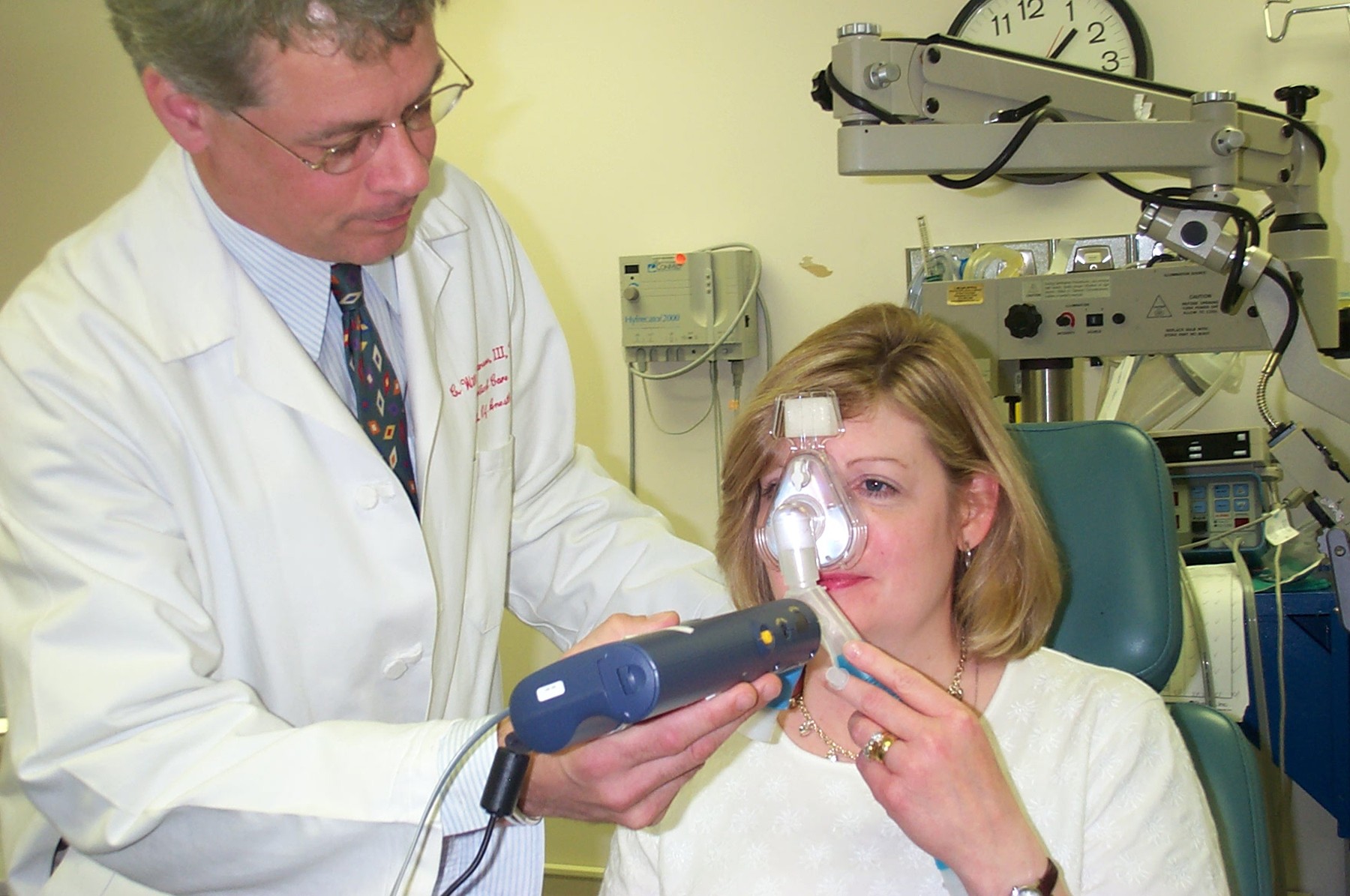
This is how the gases is collected for the e-nose nowadays. (*)

E-nose to detect the lung cancer from the breath

By Engy Fouda

Master’s student’s ultimate goal is using the electronic nose (e-nose) to analyze the patient’s breath for early lung cancer detection. He is investigating the e-nose usage for different applications as pre-steps to reach his goal. He believes that the e-nose is the fastest detection method for lung cancer.

Full Article

Donate Your Knowledge!

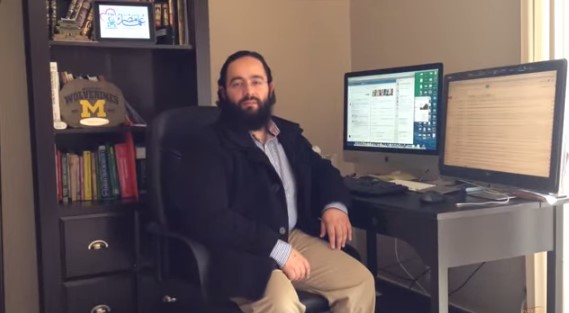
Dr. Khaled Alashmouny talking about Egypt Scholars Inc., having its logo in Arabic on the shelf behind him.

Dr. Khaled Alashmouny talking about Egypt Scholars Inc., having its logo in Arabic on the shelf behind him.

When Khaled Alashmouny was 10 years old, he used to fix burned AC fuse by twisting 3 filaments of a copper wire and inserting them instead of the fuse to get the AC working again. A couple years later he was electrically shocked many times while playing: “disassembly the refrigerator” to make some measurements with his new toy “multi-meter.”

Alashmouny, today an Analog Integrated Circuit Designer in Apple, is no longer simply twisting copper wire. He holds Ph.D. from Michigan University, is working on the development of future Apple mobile devices. Before joining Apple, he registered several patents and published several papers related to recording and analyzing brain neural signals to detect the sleep apnea syndrome.

Alashmouny said that his greatest contribution though is as the force behind the prevailing scientific and technological online hub represented in a non-profit organization called Egypt Scholars (ES) Inc. The Egyptian revolution demonstrated how networking people through social media can change the world face politically. It inspired him to embark a new scientific and technical volunteering initiative. After discussions with a small group of graduate students and professionals living in different parts of the world, they collaborated to set up ES as a new ecosystem with slogan: “Every Mind makes a Difference.”

”The one must work on something that prosper not during his life but extends its benefits after his lifetime,” Alashmouny said.

They started with a Facebook page then a wiki-site then currently a complete online platform. “We surmounted the limits of the limits,” Dr. Amjad Abu Jbara, Applied Scientist in Microsoft and ES Board Member said.

Alashmouny’s slow venerable talking, sometimes using classic Arabic Language, conceals his enormous energy, Abu Jbara said. “He is a people magnet, energy generator and dynamo,” he added.

Egypt Scholars is not Alashmouny’s first experience in volunteering and gathering people to give sessions and share research experience. In 2010, he was the chair for engineering symposium in University in Michigan, the university awarded him “College of Engineering Distinguished Leadership Award,” for his exceptional contributions.

“He is very persistent, very diligent and always know how to find time,” Dr. Ahmed Hassan, Researcher in Microsoft Research and ES Board member said. ES should focus on more precise goals in 2015, “When there is a far away goal, you run in too many directions wishing any get you closer to your dream,” he added.

Alashmouny was an apathetic teenager, until a day he got sick and his doctor sarcastically remarked on that attitude but his mother zealously strove to vindicate his behavior. “It was a turning point in my life, when I found my Mom thinks that well of me, I reclaimed, to not let her down,” said Alashmouny.

“He has immense passion and his ambition sometimes exceed what all of us as volunteers can afford!” Dr. Abdelrehim Ahmed, Researcher in Microsoft and ES pioneer member said. Dr. Ahmed concurred that currently, empowering the students and teaching them how to make research and how to apply for Masters and Ph.D. degrees abroad are the most important tasks for ES.

Alashmouny envisions Egypt regaining its position as a cornerstone center for excellence in modern sciences, high-tech industries and entrepreneurship. “I learned that the one should develop and invest in the people not the land.”

‫#‏ادعم_علماء_مصر‬
‪#‎Support_Egypt_Scholar

https://www.razoo.com/story/Supportegyptscholars

Which microcontroller to choose?

I have always been in the dilemma of which microcontroller to choose and work on, on the previous courses or projects I worked on, my supervisor used to take that decision for me to leave me the challenge of getting it working.

But now I’ll start my project that has certain limitations; I want to choose the easier cheaper & most suitable microcontroller this time that fits that project, I decided to dig it hard and I thought about sharing this information and document my trip between the different types and brands, may be it will be useful to someone else who stands in my current position, or to me later when I get older and suffer from memory loss ;- ).


If you want a brief introduction to microcontroller, here is this link:

http://www.societyofrobots.com/microcontroller_tutorial.shtml

& of the different types of the augmented boards here you are this link:

http://www.societyofrobots.com/robot_parts_list_microcontrollers.shtml


I plan to make a comparison of these different augmented boards later to help in the beginner projects, and for me I do it to end this hassle every time I decide to teach the course of introduction to microcontrollers, please follow the posts.


Now I’ll compare between the microcontrollers themselves, the larges two names in the market nowadays are PIC and ATMEL.

I searched a lot for the differences between them, downloaded a lot of datasheets and finally of course visited some forums that discussed this topic.

To summarize what I found on the forums, simply I found that everybody is saying that there is not a huge real difference in the capabilities, ATMEL is cheaper, easier, has lot of free debuggers, or purchasing $50 Dragon, while PIC is more expensive.

for more details & following up the discussions here you are the forums:

http://www.electro-tech-online.com/micro-controllers/20140-atmel-vs-pic.html

http://forums.adafruit.com/viewtopic.php?t=1253

http://forums.devshed.com/embedded-programming-163/which-is-best-pic-arm-msp430-atmel-atmega168t-641623.html


Please take in consideration, that the comparison I’ll do won’t take the programming language in consideration because I know all of them, I know C/C++, Assembly, Java, Visual Basic,..etc.

I’ll mainly concentrate on the I/O no. and memory required because of my current project.

My current project has 3 main limitations:

1. Large I/O pins, about 400 pins!!

2. Large Memory required about 4MB; this is large to a microcontroller!!

3.Power consumbtion.

Of course I’ll use many microcontroller chips; the design will have them cascaded; some working in parallel and other in sequence.

No need for AD as all IO are already digital but may be I’ll make use of the interrupts pins.

For the above limitations, of course I can’t use any augmented boards, many of their features will be useless, and moreover they will decrease my IO & memory which I need so hard.


Now I’ll start digging the features and different types of ATMEL.

The best device introduction is on this link:

http://en.wikipedia.org/wiki/Atmel_AVR


Basic Families

AVRs are generally classified into four broad groups:

tinyAVR — the ATtiny series

0.5–8 kB program memory

6–32-pin package

Limited peripheral set

megaAVR — the ATmega series

4–256 kB program memory

28–100-pin package

Extended instruction set (Multiply instructions and instructions for handling larger program memories)

Extensive peripheral set

XMEGA — the ATxmega series

16–384 kB program memory

44–64–100-pin package (A4, A3, A1)

Extended performance features, such as DMA, “Event System”, and cryptography support.

Extensive peripheral set with DACs


of course if I’m going to choose ATMEL then it will be ATEM XMEGA, for further details & for downloading the data sheets, here you are the link:

http://www.atmel.com/products/AVR/default_xmega.asp

To make it short, these are the most important links in this page:

For comparing and purchasing ATMEL, please visit :

http://www.mouser.com/Semiconductors/Microcontrollers-Microprocessors/Microcontrollers-MCU/_/N-6hpeg?Keyword=ATxmega&FS=True


For comparing and purchasing PIC, please visit :

http://www.microchip.com/ParamChartSearch/chart.aspx?branchID=8097&mid=14&lang=en


OK, in fact there are many other microcontrollers, like Motorolla, let’s have af further deeper look at it in the next post ISA and compare it to PIC and ATMEL.