My piece at Harvard Extension School Paper: A FATHER AND SON’S STORY IN SCIENCE STORYTELLING: VIROL VLOG

http://www.hesponline.com/a-father-and-sons-story-in-science-storytelling-virol-vlog-engy-fouda/

Virol Vlog new logo 

A father and son’s story in science storytelling: Virol Vlog 

HOPEWELL JUNCTION, N.Y. — The father gets ready to shoot a new video in the house basement with a green background behind him.  

His son hardly reaches the camera holding the clapboard and says, “EBOLA. Take four. Action.” Then he claps it.  

Islam Hussein, an American-Egyptian virologist and scientist at Massachusetts Institute of Technology, and his middle-school son, Adham Hussein, have a YouTube channel called Virol Vlog.  

Hussein said the name is composed of two parts. The first part, Virol, stands for Virology, and the second part, Vlog, stands for Video blog.  

Adham said, “In this world, we try to input what we can do to make it a better place. I feel that we are adding when one person learns from our videos and correct his knowledge.” 

They counterattack how the unprofessional media mishandle the science of viruses, Hussein said. They present an alternative channel by producing funny short videos for the general public.  

Moreover, they contribute to the Arabic content on the web where only 3 percent of the internet content is in Arabic, according to a report published by the UNESCO.   

Adham said when he grows up, he wants to pursue a filmmaking degree, then another degree in any other technical field.  

Hussein laughed and said that Adham will take a degree in engineering first then in filmmaking.  

Adham said that he is still young, and they can discuss this issue later. 

The start 

Hussein said that the spark to produce these videos was on Feb. 22, 2014. He said he was shocked by an announcement made by the official spokesman of the Egyptian Armed Forces claiming that they invented new devices for treating HIV and hepatitis C patients.  

The media in Egypt produced propaganda that these devices can cure all viral infections.   

Major General Ibrahim AbdulAtti, the inventor of these devices, said on the national television that his cure could turn viruses of the infected patients into a kofta kabob. 

“Outrageous claims that AbdulAtti clinic can cure AIDS with ground beef kabob,” Hussein said. He posted a video on YouTube to prove Major AbdulAtti’s false claims.  

The video went viral.  

The process  

Hussein said, “I deal with these videos as if I am publishing a scientific paper.” He said that he takes much time to generate the ideas and research them.  

Then he writes a script. “I try to live it. If I have to give a particular facial expression, I digest it like a small acting scene,” Hussein said. 

Afterward, Hussein and Adham go to their house basement to shoot the video and the audio multiple times. Hussein said the shooting of a 15-minute video might take a day or at least half a day. 

Adham said they shoot the scene 10 or 20 times till they are satisfied with the quality. “We are both very stubborn, and we want the best,” he said. 

 
Hussein said that their learning curve was painful as they started without any experience in filmmaking or video editing. They learned by trial and error, YouTube tutorial videos, Udemy and Lynda courses.  

As any academic researcher, Hussein initially recorded the first video as a PowerPoint presentation along with the audio.  

“People hated it,” Hussein said. 

Their scientific videos comprise humor with virus puppets and funny shots  

Consequently, Hussein said they revamped the video style by buying a studio umbrella lighting with a green screen background, camera and some virus puppets. Then they shoot Hussein explaining.  

Finally, they comprise humor to the scientific videos with demonstrating diagrams and some fun shots from related Arabic movies.  

Nevertheless, Hussein said the audio was terrible.  

With experience, they now record the audio with two mics independent from the video and sync them later in the editing, he said.  

Hussein said that he keeps a log of any comment that he finds useful whether negative or positive in Evernote. Adham never knew that.  

Adham said, “He keeps things from me!”  

They laughed. 

It takes about a week after shooting to edit, render and upload the video to YouTube, Hussein said.  

Funding 

The main challenge they face is the funding as the devices are expensive, Hussein said.  

Last year, they ran an Indiegogo crowd funding campaign. It enabled them to buy a new computer instead of the 5-year-old laptop that used to take extended time in rendering videos, a new camera and mic, Hussein said. 

He said, “The Indiegogo campaign still accepts money. However, we seek a sponsor.” 

Currently, they rely on their fans and peers to fund them monthly as their patrons

Future plans 

Hussein said if they have enough funding, they will produce scientific videos for children. Kids videos need a myriad of animation which is a high cost. Moreover, they plan to produce videos in English and to add English captions to their Arabic videos.  

“The problem with Arabic is that our videos have cultural inferences and jokes,” Hussein said. 

Unless they hire professional translators, the captions will be gibberish. According to Unbabel, a prominent company that develops an artificial intelligence powered human translations, Arabic is the second toughest language to translate to English.  

Hussein said he wishes to have a working group to brainstorm ideas with, and to be able to produce regular videos. However, Adham said that they are a team of two, and it works well.  

“I am glad to be part of something bigger than just being myself and help in educating people,” Adham said. 

Father-son relationship 

From left to right: Reem Hussein, Randa Azab, Islam Hussein and Adham 

In response to their father-son relationship, Hussein said the Virol Vlog added to their relationship.  

However, he said that in this initiative, he works with Adham as his partner not his son. Hence, he relies on Adham in learning any new technical skill; then Adham teaches it to him.  

“It brought us much closer as a family. For example, I can criticize him,” Adham said with a laugh and said, “For example, about the funny references, I provide input as I can.” 

Adham said, “My older sister, Reem, and Mama put immense input, comments and critique.” Besides, at times, his sister helped in shooting by being behind the camera. 

Randa Azab, Hussein’s wife and Adham’s mother, said that Islam always shares his knowledge. Azab and Hussein were peers in the same class at the veterinary medicine faculty. 

“Our love was at the morgue,” she said.  

Her first day was at the morgue. She said formalin scent was vehement that blurred her eyes. Then she saw Hussein holding a horse leg and explaining its anatomy to his peers.   

“It takes a lot of work. They don’t profit from it. People don’t realize how much work and money that goes into producing [the Virol Vlog videos],” Reem Hussein said. 

My new article at Harvard Extension Student Paper: ZAMIR HASSAN: MUSLIMS AGAINST HUNGER

http://www.hesponline.com/zamir-hassan-muslims-against-hunger-engy-fouda/

Zamir Hassan: Muslims Against Hunger 

A software engineer combats America’s hunger crisis 

By Engy Fouda 

Zamir Hassan’s story about combating hunger started in 2000 when he chaperoned his son’s school to a soup kitchen in a wealthy neighborhood in New Jersey close to his house. On that day, he and the other volunteers fed more than two hundred people. “There are hungry people around me, and I don’t even know that they are here. As a Muslim, I am not supposed to go to bed if my neighbor is hungry. I started reflecting on that, what kind of Muslim I am?!” said Hassan, the founder of Muslims Against Hunger in a hotel room in Washington D.C. via Skype interview.  

Hassan is a retired software engineer who grew up in Pakistan and moved to the U.S. in 1973. He studied at Cornell University, lived in New York, and currently lives in New Jersey. “I was in IT [Information Technology] before there was IT. So, I had a good life, as I did well financially,” said Hassan with a smile in retrospect. Since the soup kitchen day, he has dedicated his life to counter hunger in the U.S. 

Hassan said that the name of the “soup kitchen” historically was formed when a Christian person asked everybody to bring food for charity. Everybody brought different dishes. To serve everybody equally, he decided to cook all the food together in a big pot and to serve it as soup.  Similarly, the food choices caused a dilemma when Hassan and his friends decided to make a soup kitchen at their mosque. His friends proposed cooking pizza, spaghetti, and Italian food. Hassan objected that idea because at their houses they eat tandoori chicken, samosa, baklava, and other oriental dishes. He told them that Muslims should share from food that they themselves eat at their houses. He assured in a firm voice, “As a Muslim, I am supposed to feed people from my own plate. We practice our religion, but we don’t live it. To live it every day, we feed people from what we eat.” Now, their soup kitchen serves various cuisines depending upon what the volunteer cooks eat at their houses.  

Albeit charity is a pillar of Islam, the shortage of volunteers to help in the soup kitchen always challenges Hassan. Hence, he used to trick his friends by inviting them over to his house. After they arrived, he would ask them to come with him on an urgent short trip. To their surprise, he would drive them to the soup kitchen to cook and serve. When they finished volunteering, he drove them back to his home for an oriental dinner. The experience of volunteering at the soup kitchen usually enraptured his friends; hence, they would ask him to invite them again to help. “My goal is to engage Muslims in their communities. I want to change their mindset. They have to live their religion, not only practicing it,” said Hassan. His position is that Islam is not merely about rituals and building mosques but about daily charity – similar to the Muslim’s five daily prayers. He based his opinion on the continuous pairing of the prayer with charity in the Quran. Therefore, he founded various programs to fight hunger. 

In 2011, Hassan started the “Hunger Van” program, a mobile version of the soup kitchen. The program is designed to reach the needy instead of waiting them to come to the soup kitchen. Accordingly, the local volunteers register on the Hunger Van website, and Hassan drives the van to them where he teaches them how to prepare his sandwiches. Hassan makes two types of sandwiches which he calls them honey bee sandwich and peace sandwich.  

The honey bee sandwich, he spreads honey on one bread slice with a cinnamon sprinkle, the other slice has peanut butter, and in between a sliced banana. While the peace sandwich is hummus on the two slices with salad in between. In winter, he and the volunteers make both sandwiches, but in summer, they make the honey bee only because hummus goes bad fast. Then, they drive the van to the local areas where the volunteers know that there are homeless people and hand them the sandwiches. “Last year, we distributed 30,000 meals. A hundred and fifty meals came from Non-Muslims: churches, synagogues, and Hindu temples. In 2016, we participated in 9/11 event and sponsored making 500,000 meals on the day of 9/11,” added Hassan.  

Because other religions stepped up, Hassan expanded Muslims Against Hunger and initiated Faith Against Hunger, an interfaith program for combating hunger. “Hunger has no religion,” he said. He criticized how some Muslims were reluctant to collaborate with other religions. He spreads the interfaith message not only with food; last year, a Hindu Sunday School in New Jersey invited him to teach a class about charity. In addition to the paucity of the volunteers, he struggles with the funding and endures from politics. 

For instance, on the following day of Paris attacks, on 16th November 2015, Hassan had a Hunger Van event in Boston with some local volunteers. One of the homeless people shouted at a veiled lady from the volunteers questioning her if there was poison in the sandwiches. As she was a psychiatrist, she laughed despite of her surprise and engaged him in a conversation. She allayed his fears by replying that she could take a bite from the sandwich, which convinced him to try the sandwiches.  After few minutes, the incident was repeated with another homeless person who after calming down asked about the origins of the sandwiches. Hence, they decided naming the hummus sandwich as the peace sandwich as both the Arabs and the Jews claim that that hummus is theirs, but they do not fight over it. 

On the other hand, Tarek Sharaf, a Muslim who volunteers with Hassan, said that he has never experienced any negative situations similar to the one in Boston. On the contrary, he has always experienced appreciation and thankfulness. Sharaf also organizes a soup kitchen at his local mosque on a monthly basis. “Brother Zamir does amazing work,” he said. “I think that this what Muslims need, especially, nowadays considering the current environment.” Sharaf bolsters Hassan’s perspective about practicing the religion’s beliefs through action instead of preaching, especially for young Muslims who have shown a commitment to community service, “They really enjoy making a difference,” he said. “I always remind them [young Muslims] that the Prophet had a daily soup kitchen feeding 70 poor people every day.” He added that Muslims Against Hunger was an innovative, unique project when it started, but now there are myriad projects similar to it.  

For instance, Sharaf volunteers at a Pious Projects America Organization, a nonprofit charitable organization that links projects with donors in the U.S. and Canada. Pious Projects of America mission as stated on its website, “ [it] created a way for people to take part in humanitarian charitable projects from all over the world. It partnered up with the best charitable organizations and developed a crowdfunding platform for people to donate to as many causes that they feel are important all under one place.” In December, they handed the homeless people in New Jersey a “winter kit” containing a pair of gloves, a blanket, a pair of socks, a hat, and a snack. Alas in the U.S., the homelessness, hunger, and poverty rates are high even though there are enormous of such projects. 

  According to Do Something Organization, fifty-four million people suffer hunger in the U.S. Sarcastically, the organization states that 40 percent of food is thrown out in the U.S. every year. Hassan defines hunger similar to the United States Department of Agriculture definition of hunger or food insecurity as “the lack of access, at times, to enough food for all household members.”   

To continue his advocacy efforts, Hassan travels across the states with his Hunger Van to teach people how to set up a soup kitchen. He wishes to establish a soup kitchen at every mosque, and for every Muslim to practice charity by feeding others on a daily basis. While tapping his fingers on the table, he concluded, “It is about time that we walk the talk. Stop talking. Walk the talk.” 

My new article at MVSLIM.com:Zamir Hassan – a Software Engineer Who is Combatting America’s Hunger Crisis

https://mvslim.com/zamir-hassan-a-software-engineer-who-is-combatting-americas-hunger-crisis/

Zamir Hassan: Muslims Against Hunger 

A software engineer combats America’s hunger crisis 

By Engy Fouda 

Zamir Hassan’s story about combating hunger started in 2000 when he chaperoned his son’s school to a soup kitchen in a wealthy neighborhood in New Jersey close to his house. On that day, he and the other volunteers fed more than two hundred people. “There are hungry people around me, and I don’t even know that they are here. As a Muslim, I am not supposed to go to bed if my neighbor is hungry. I started reflecting on that, what kind of Muslim I am?!” said Hassan, the founder of Muslims Against Hunger in a hotel room in Washington D.C. via Skype interview.  

Hassan is a retired software engineer who grew up in Pakistan and moved to the U.S. in 1973. He studied at Cornell University, lived in New York, and currently lives in New Jersey. “I was in IT [Information Technology] before there was IT. So, I had a good life, as I did well financially,” said Hassan with a smile in retrospect. Since the soup kitchen day, he has dedicated his life to counter hunger in the U.S. 

Hassan said that the name of the “soup kitchen” historically was formed when a Christian person asked everybody to bring food for charity. Everybody brought different dishes. To serve everybody equally, he decided to cook all the food together in a big pot and to serve it as soup.  Similarly, the food choices caused a dilemma when Hassan and his friends decided to make a soup kitchen at their mosque. His friends proposed cooking pizza, spaghetti, and Italian food. Hassan objected that idea because at their houses they eat tandoori chicken, samosa, baklava, and other oriental dishes. He told them that Muslims should share from food that they themselves eat at their houses. He assured in a firm voice, “As a Muslim, I am supposed to feed people from my own plate. We practice our religion, but we don’t live it. To live it every day, we feed people from what we eat.” Now, their soup kitchen serves various cuisines depending upon what the volunteer cooks eat at their houses.  

Albeit charity is a pillar of Islam, the shortage of volunteers to help in the soup kitchen always challenges Hassan. Hence, he used to trick his friends by inviting them over to his house. After they arrived, he would ask them to come with him on an urgent short trip. To their surprise, he would drive them to the soup kitchen to cook and serve. When they finished volunteering, he drove them back to his home for an oriental dinner. The experience of volunteering at the soup kitchen usually enraptured his friends; hence, they would ask him to invite them again to help. “My goal is to engage Muslims in their communities. I want to change their mindset. They have to live their religion, not only practicing it,” said Hassan. His position is that Islam is not merely about rituals and building mosques but about daily charity – similar to the Muslim’s five daily prayers. He based his opinion on the continuous pairing of the prayer with charity in the Quran. Therefore, he founded various programs to fight hunger. 

In 2011, Hassan started the “Hunger Van” program, a mobile version of the soup kitchen. The program is designed to reach the needy instead of waiting them to come to the soup kitchen. Accordingly, the local volunteers register on the Hunger Van website, and Hassan drives the van to them where he teaches them how to prepare his sandwiches. Hassan makes two types of sandwiches which he calls them honey bee sandwich and peace sandwich.  

The honey bee sandwich, he spreads honey on one bread slice with a cinnamon sprinkle, the other slice has peanut butter, and in between a sliced banana. While the peace sandwich is hummus on the two slices with salad in between. In winter, he and the volunteers make both sandwiches, but in summer, they make the honey bee only because hummus goes bad fast. Then, they drive the van to the local areas where the volunteers know that there are homeless people and hand them the sandwiches. “Last year, we distributed 30,000 meals. A hundred and fifty meals came from Non-Muslims: churches, synagogues, and Hindu temples. In 2016, we participated in 9/11 event and sponsored making 500,000 meals on the day of 9/11,” added Hassan.  

Because other religions stepped up, Hassan expanded Muslims Against Hunger and initiated Faith Against Hunger, an interfaith program for combating hunger. “Hunger has no religion,” he said. He criticized how some Muslims were reluctant to collaborate with other religions. He spreads the interfaith message not only with food; last year, a Hindu Sunday School in New Jersey invited him to teach a class about charity. In addition to the paucity of the volunteers, he struggles with the funding and endures from politics. 

For instance, on the following day of Paris attacks, on 16th November 2015, Hassan had a Hunger Van event in Boston with some local volunteers. One of the homeless people shouted at a veiled lady from the volunteers questioning her if there was poison in the sandwiches. As she was a psychiatrist, she laughed despite of her surprise and engaged him in a conversation. She allayed his fears by replying that she could take a bite from the sandwich, which convinced him to try the sandwiches.  After few minutes, the incident was repeated with another homeless person who after calming down asked about the origins of the sandwiches. Hence, they decided naming the hummus sandwich as the peace sandwich as both the Arabs and the Jews claim that that hummus is theirs, but they do not fight over it. 

On the other hand, Tarek Sharaf, a Muslim who volunteers with Hassan, said that he has never experienced any negative situations similar to the one in Boston. On the contrary, he has always experienced appreciation and thankfulness. Sharaf also organizes a soup kitchen at his local mosque on a monthly basis. “Brother Zamir does amazing work,” he said. “I think that this what Muslims need, especially, nowadays considering the current environment.” Sharaf bolsters Hassan’s perspective about practicing the religion’s beliefs through action instead of preaching, especially for young Muslims who have shown a commitment to community service, “They really enjoy making a difference,” he said. “I always remind them [young Muslims] that the Prophet had a daily soup kitchen feeding 70 poor people every day.” He added that Muslims Against Hunger was an innovative, unique project when it started, but now there are myriad projects similar to it.  

For instance, Sharaf volunteers at a Pious Projects America Organization, a nonprofit charitable organization that links projects with donors in the U.S. and Canada. Pious Projects of America mission as stated on its website, “ [it] created a way for people to take part in humanitarian charitable projects from all over the world. It partnered up with the best charitable organizations and developed a crowdfunding platform for people to donate to as many causes that they feel are important all under one place.” In December, they handed the homeless people in New Jersey a “winter kit” containing a pair of gloves, a blanket, a pair of socks, a hat, and a snack. Alas in the U.S., the homelessness, hunger, and poverty rates are high even though there are enormous of such projects. 

  According to Do Something Organization, fifty-four million people suffer hunger in the U.S. Sarcastically, the organization states that 40 percent of food is thrown out in the U.S. every year. Hassan defines hunger similar to the United States Department of Agriculture definition of hunger or food insecurity as “the lack of access, at times, to enough food for all household members.”   

To continue his advocacy efforts, Hassan travels across the states with his Hunger Van to teach people how to set up a soup kitchen. He wishes to establish a soup kitchen at every mosque, and for every Muslim to practice charity by feeding others on a daily basis. While tapping his fingers on the table, he concluded, “It is about time that we walk the talk. Stop talking. Walk the talk.” 

Faith Activism-Preparing American Muslim youth to be community leaders

emerge_hijab

To raise the awareness and to see many politically  active American Muslims, I wrote my first article at Blasting News:

http://us.blastingnews.com/news/2016/11/faith-activism-preparing-american-muslim-youth-to-be-community-leaders-001225145.html

In fact, my original article was double this length but I had to cut its half according to the site maximum length regulation. Therefore, ISA will try to publish soon some unpublished excerpts ISA.

Read an share, please!

Waiting your replies and opinions!
Thanks in advance!

Image source: www.emerge-usa.org

Challenges facing American Muslim youth

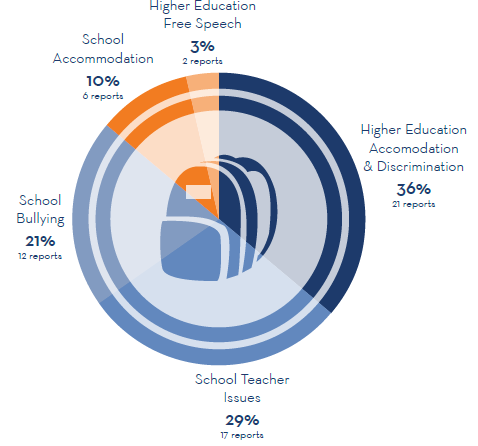
Council on American-Islamic Relations in California reports about School bullying and accommodation in its 2014 annual report.

Council on American-Islamic Relations in California reports about School bullying and accommodation in its 2014 annual report.


The second generation of American Muslim youth are facing additional challenges than their American peers. They feel unsecure and their voices are unheard from their family and communities. Many of them at young age stop practicing Islam and assimilate in the society.

“When we talked about the Islamic civilizations and my 9th grade social studies class I thought okay

I’m gonna learn something about my faith and instead and it was actually the first time that I learned how to pray with so that I could demonstrate it for my class,” said Edina Lekovic in her speech to the Institute for Social Policy and Understanding addressing identity crisis. She is the director of policy and programming in Muslim Public Affairs Council.


Sameera Ahmed and Maha Ezzeddine published a paper researching the topic. The paper title is, “Challenges and opportunities facing American Muslim Youth,” and published in Journal of Muslim Mental Health. They stated that the preliminary studies have reported that alcohol use among Muslim youth ranged from 47% to 71%. Drinking alcohol is prohibited in Islam.

Family and mosque are the main sources of the religious knowledge and spirituality. Lack of communication between them and the young people is a major problem. The American Muslim youth reported that their immigrant parents usually have culture clashes with the new society. Even the children of Muslim converts, who are Americans, reported that their parents cannot understand them because they were not raised as Muslims.

“Climate of fear exists, when people don’t know us,” Lekovic said. Islam is an active religion and Muslims believe that they are encountered for the belief strength and the good actions. Many Islamic scholars and educators focus only on enriching the belief and spirituality aspects and ignore the aspect of civic and political actions.

Peer pressure during adolescence pushes some Muslim to violate their beliefs. Some participate in school dances, drugs, and dating to feel belonging. Some protect themselves by isolation from the society in an unhealthy way. Many reported discrimination cases from school teachers and bullying from their peers.

“Young people do not know much about their faith, in to be grappling with your identity and then to be confronted with questions about terrorism or bin Laden or Sony Shia or what’s happening in Iraq or Syria or you name it, and to be made into a mouthpiece first time, whether you like it or not, is an overwhelming,” Lekovic concluded.