Thanks to Allah!
Learn Data Science Using SAS Studio: A Quick-Start Guide
(Published By Apress Springer Nature)
You can buy it at:
Paper copy at Amazon.com
https://amzn.to/3lh00JU
Digital copy at Kindle Store:
https://amzn.to/3d44DEf
Do you want to create data analysis reports without writing a line of code? This book introduces SAS Studio, a free data science web browser-based product for educational and non-commercial purposes. The power of SAS Studio comes from its visual point-and-click user interface that generates SAS code. It is easier to learn SAS Studio than to learn R and Python to accomplish data cleaning, statistics, and visualization tasks.
The book includes a case study about analyzing the data required for predicting the results of presidential elections in the state of Maine for 2016 and 2020. In addition to the presidential elections, the book provides real-life examples, including analyzing stocks, oil and gold prices, crime, marketing, and healthcare. You will see data science in action and how easy it is to perform complicated tasks and visualizations in SAS Studio.
You will learn, step-by-step, how to do visualizations, including maps. In most cases, you will not need a line of code as you work with the SAS Studio graphical user interface. The book includes explanations of the code that SAS Studio generates automatically. You will learn how to edit this code to perform more complicated advanced tasks. The book introduces you to multiple SAS products such as SAS Viya, SAS Analytics, and SAS Visual Statistics.
You will:
Become familiar with SAS Studio IDE
Understand essential visualizations
Know the fundamental statistical analysis required in most data science and analytics reports
Clean the most common data set problems
Use linear progression for data prediction
Write programs in SAS
Get introduced to SAS-Viya, which is more potent than SAS Studio
In fact, my original article was double this length but I had to cut its half according to the site maximum length regulation. Therefore, ISA will try to publish soon some unpublished excerpts ISA.
Read an share, please!
Waiting your replies and opinions!
Thanks in advance!
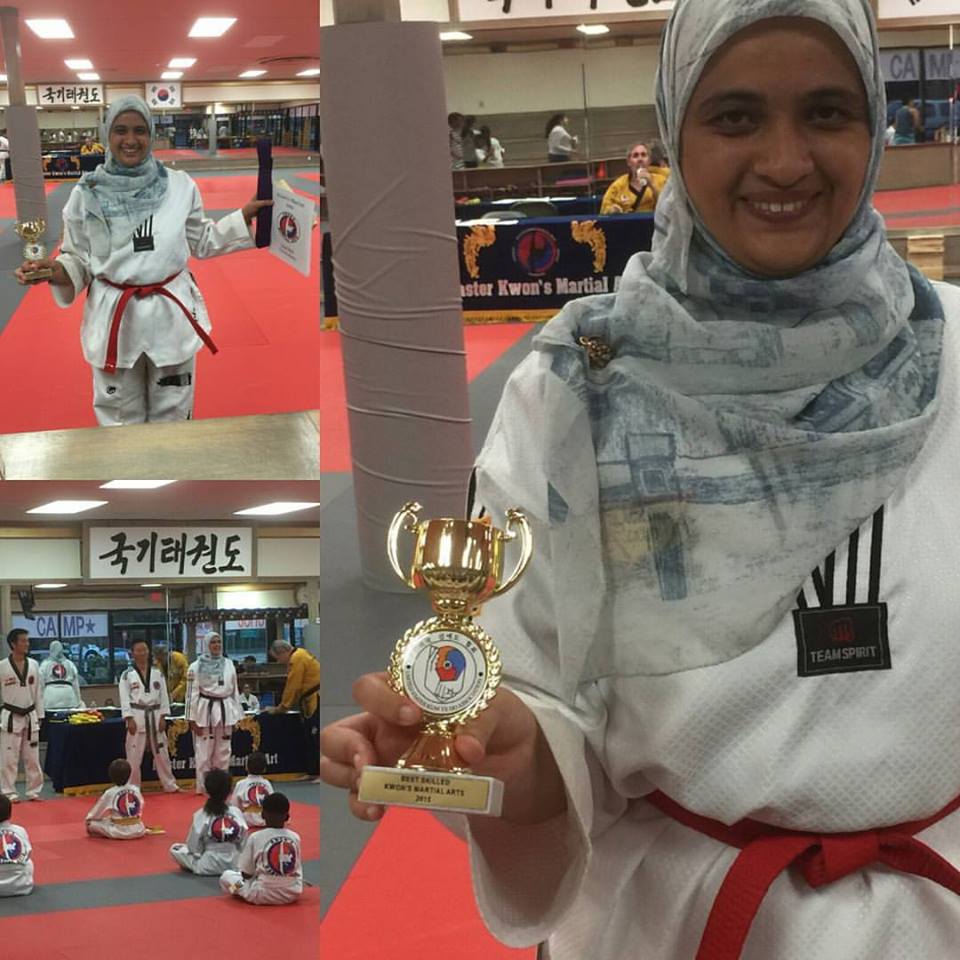
Last August, I received “Best Skills Award” at my Taekwondo School. I recovered from two fractures in my right foot before that picture, by a couple of months.
Before the test by few days, I fell because of my foot while training.
At that time, I felt that it was over and I told myself, “Respect our age, and quit it, that is enough.”
My Master came to me and told me, “Your strength is in your mind and in what you say to yourself. If your mind can visualize yourself doing the move, your body will do it. Your body has no choice, it must follow your mind’s orders. You, who manipulate your mind and direct it by what you say to yourself. Tell yourself that you can do it and you will do it. “
I said these advices to the kids in my speech after receiving the award in the small picture in the corner. I said, “Believe that you can. Make your mind visualize it. Your body will follow.
Three steps which easy to say, but need much practice to achieve.”
I applied these steps in the sparring part of the belt test. They gave me the award because of my unexpected kicks in the sparring part. No one knew that I had to do those unexpected kicks because of my foot pain. My foot started to turn red, hot and swollen. All my focus was to avoid balancing on the fractured parts.
Indeed the success is only from Allah.
Taekwondo to me is physical therapy. I had a problem in my knee that made me not able to walk for some times or use a stick. The doctor gave me medications. After I finished my physical therapy, he said that if I ever stopped playing sports, I would repeat that course again. He added that if I want to be able to walk then I have to walk. I remembered at that time, Prophet’s Mohamed telling us that knowledge can be achieved by learning and being tolerant can be achieved by being tolerant.
Frankly, Taekwondo is psychological therapy, too.
I had a bad depression. It was worse than any physical illness.
In Taekwondo, I kick, hit, break wood boards, scream and do the energy exercises.
First day in Taekwondo, I was so embarrassed and was telling myself that I am too old to start anything. But I found that I was the youngest in the class.
Many of my daughter’s friends’ families stayed to cheer for me on my test. Everybody was encouraging me to stay persistent. Nobody was aware of the fight I had with my culture and my thoughts.
Conclusion: You can do whatever you want under whatever circumstances.
Allah created your mind free with extraordinary powers.
You who limit your mind and imprison it. Your body consequently will follow because the body has to follow the mind’s orders and has no other choice.
Free your mind and watch the new you!
Forget the people and do what you want.
Life is short and it is only a test.
The real life is the hereafter.
So purify the intentions.
#homeschooling #parenting #kids #math_for_kids #تعليم_منزلي #رياضيات_للأطفال (English translation below)
فيه برامج كتيرة لتعليم الرياضيات للأطفال
إليكم نتائج بحثي و تجاربي … يا ريت تفيدوني
1. يوسيماس
لم أجد له طريق تعليم بالمنزل مع الأسف
لازم سنتر و تدريب يومي
لكن النتائج اللي موجودة أونلاين تفوق الخيال
للأسف أقرب سنتر له في نيويورك سيتي و مفيش جادة جنبي 🙁
2. كيومون:
و ده عبارة عن كتب كلها مسائل فقط
مريح جدا للأباء طبعا
تقعد و هم يحلوا و يصلحوا لنفسهم قشطة خالص 🙂
في الأول بتكون طريقة لطيفة لكن بعد شوية بتكون مملة السنين
كنت بعملها لكن حاليا بنتي وقفته غالبا عشان تغلبني معاها 🙂
3.الرياضيات الذهنية
و ده له استراتيجيات حل
لسه مجربتوش لكن له مصادر كثيرة جدا أونلاين
اللي لقيته حتي الان:
https://www.teachingchannel.org/videos/third-grade-mental-math
4. خان أكاديمي
مجاني و مريح برضه و مطابق لمنهج المدرسة بالضبط
فيديوهات بتشرح و بعدين هم تدريبات يحلوا و أنت يجيلك الريبورت زي الباشا
لكن كالعادة برضه بنتي وقفته و مش عاجبها!!!!!!!
5. رياضيات ساكسون
ده المنهج اللي بتدرسة المدارس الشارتر هنا في أمريكا
عبارة عن مسائل مختلفة و منتوعة و كثيرة جدا جدا جدا
لازم تقعد تعملها معاهم بنفسك
مش هيعرفوا يحلوها لوحدهم خاصة اني ملقتش كتب حلول
الكتب موجودة أونلاين نزل اللي يناسب عمر أولادك
https://www.google.com/search?q=saxon+math+homeschool&oq=saxon+math+&aqs=chrome.1.69i57j0l5.8701j0j7&sourceid=chrome&es_sm=93&ie=UTF-8#q=saxon+math+pdf
6.أي اكس ال
موقع مجاني و لطيف و كله ألوان فيشرح القلب
مش فاكرة وقفناه ليه بصراحة 🙁
https://www.ixl.com/
7.طريقة ميلر
المركز ده جنب بيتي و الطلبة الباكستانين اللي عندي في المسجد بيروحوه و بيقولولي انهم بياخدوا مناهج ثانوي و هم لسه في ابتدائي
حاولنا نسجل فيه بنتي لكن محصلش مش فاكرة ايه اللي حصل برضه ؟!
لكنه ضاف بعض الفيديوهات أونلاين تقدروا تشوفوها، أنا ليه مشوفتهاش، لسه لاقياه و أنا بكتب دلوقتي
http://www.mathphysicsexplore.org/MPEactivities/Math.aspx
8. موقع تن ماركس
منال ربنا يكرمها لسه قايلالي عليه لكنه بفلوس
www.tenmarks.com
اللي يقدر يفيدني في حدوتة uc mas أكون ممتنة جدا جدا جدا
There are many progams to teach kids math
Here you are my experiences and what I found, I wish you, too tell me about your experiences
1. uc mas
I did nt find a homeschooling way for it
It is only taught in centers, I don’t have one nearby
but the result on youtube are amazing
2.Kumon
It is just worksheet books
Parent don’t have to do anythig except followup
Kids sit, solve, correct for themselves
My daughter found it boring after a while 🙁
3. Mental math
it’s solving strategies
It has many free resources online
https://www.teachingchannel.org/videos/third-grade-mental-math
4.Khan Academy
It is free & matching exactly teh public schools currcilum
again free and parents won’t put any effort
videos explaining followed by excercies and the site send you report of your kids progress
but again my daughter stopped using it
5.Saxon Math
It is used in the chartered schools here in USA
worksheets but the problems are so different and so various
you must do it with your kids
I did nt find sol. workbook for it
but looks intersting and challenging
you can sownload it online
https://www.google.com/search?q=saxon+math+homeschool&oq=saxon+math+&aqs=chrome.1.69i57j0l5.8701j0j7&sourceid=chrome&es_sm=93&ie=UTF-8#q=saxon+math+pdf
6. IXL
nice, & colorful
can’t remember now why we stopped using it
I think I should revisit it
https://www.ixl.com/
7. Miller method
kids I know told me that they learn high school math while they are still in elementery
he added some videos, take a look
http://www.mathphysicsexplore.org/MPEactivities/Math.aspx
8. tenmarks
not free
did nt try it
a friend just told me about it from few min
www.tenmarks.com
who can tell me how to teach uc mas methoad at home, I’d be so grateful indeed
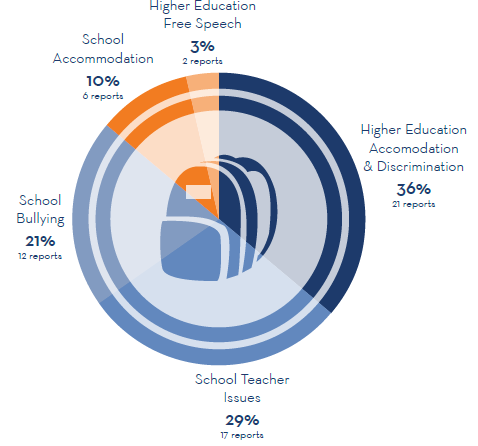
Council on American-Islamic Relations in California reports about School bullying and accommodation in its 2014 annual report.
The second generation of American Muslim youth are facing additional challenges than their American peers. They feel unsecure and their voices are unheard from their family and communities. Many of them at young age stop practicing Islam and assimilate in the society.
“When we talked about the Islamic civilizations and my 9th grade social studies class I thought okay
I’m gonna learn something about my faith and instead and it was actually the first time that I learned how to pray with so that I could demonstrate it for my class,” said Edina Lekovic in her speech to the Institute for Social Policy and Understanding addressing identity crisis. She is the director of policy and programming in Muslim Public Affairs Council.
Sameera Ahmed and Maha Ezzeddine published a paper researching the topic. The paper title is, “Challenges and opportunities facing American Muslim Youth,” and published in Journal of Muslim Mental Health. They stated that the preliminary studies have reported that alcohol use among Muslim youth ranged from 47% to 71%. Drinking alcohol is prohibited in Islam.
Family and mosque are the main sources of the religious knowledge and spirituality. Lack of communication between them and the young people is a major problem. The American Muslim youth reported that their immigrant parents usually have culture clashes with the new society. Even the children of Muslim converts, who are Americans, reported that their parents cannot understand them because they were not raised as Muslims.
“Climate of fear exists, when people don’t know us,” Lekovic said. Islam is an active religion and Muslims believe that they are encountered for the belief strength and the good actions. Many Islamic scholars and educators focus only on enriching the belief and spirituality aspects and ignore the aspect of civic and political actions.
Peer pressure during adolescence pushes some Muslim to violate their beliefs. Some participate in school dances, drugs, and dating to feel belonging. Some protect themselves by isolation from the society in an unhealthy way. Many reported discrimination cases from school teachers and bullying from their peers.
“Young people do not know much about their faith, in to be grappling with your identity and then to be confronted with questions about terrorism or bin Laden or Sony Shia or what’s happening in Iraq or Syria or you name it, and to be made into a mouthpiece first time, whether you like it or not, is an overwhelming,” Lekovic concluded.
Egyptian revolution, which turned everybody into activist and/or advocate.
Through two lectures at Harvard Extension, we discussed the differences between: advocate, activist and journalist. In this piece, will summarize the different ideas we discussed. The main question was: “Should a journalist be an advocate or activist?”
The difference between the advocate and activist; the advocate is helping someone or a group or a cause by written word or orally. While the activist, is the one on the ground, rallying and organizing people to make the change.
The journalist, should be neutral, he has to be objective and never state his own thoughts or push them in his pieces. He should be fair and report the different opposing parties over the conflict and not sticking to one side only.
The journalist should neither be an activist nor advocate. Most of us became skeptical about this point; journalism is the Fourth State and should inform the public. If a journalist is enthusiastic about a certain cause, he should not be an advocate for it but on best cases, report people who have his same views and values.
There are gray areas, like freedom of speech. Dan Gillmor wrote: “When it comes to free speech, journalists should be activists.” The main goal from freedom of speech is restraining the government from corruption, it acts like the watchdog.
The journalist can be an activist for a certain cause, hence, he should not report about it. He can have several hats as activist, author or journalist. But during the reporting, the journalist has to remind himself to stay objective and report what the sources are saying even if he personally has opposing point of view.
Moreover, according to these criteria, most of the media outlets right now are not objective. They drive the public’s opinion according to their agendas. Fair and objective journalist should not have any agenda.
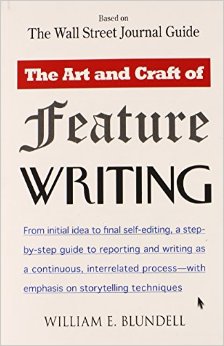
Blundell’s guide for feature writing is divided according to the writing process. He started by finding an idea, sources, followed by shaping the idea, then discussing the story dimensions, then planning and execution, and organizing the piece. He dedicated a special chapter for handling the key story elements; like the lead and the ending.
It is hard to jump through the chapters of the book or to skip chapters. It is built piece onto the other.
I was shocked by his list of what readers like and do not like…. Dogs to be onto the top of the list! People who are actors are much more preferred by the readers than the observers. Nevertheless, at some cases, the observers make a well formed analysis and explanation, thus the reader can understand, link unrelated events and show a zoom-out picture to the reader.
He emphasized on keeping the range of the story “narrow” to be sharp. He summarized the forethought to the reporter as follows: range of the story, central message/theme, the approach and the tone as a storyteller.
The range is the cause and effect map, where the reporter must consider: time, distance, and constituencies.
The theme is the message, it must concentrate on the action. It embeds the lead within it.
The approach can be a general profile approach, microcosm approach or round-up approach. The general profile focuses on the differences, while the microcosm profile focuses on the similarities. The round-up approach is safer by providing many voices.
The tone is the voice. Blundell summarized it in an easy method. He said: “Always consider your own feelings about the story idea before you start reporting and throughout…. If you are amused, skeptical, outraged…Hang on to your emotions… Your reporting and writing will be guided toward values they may not have included before.”
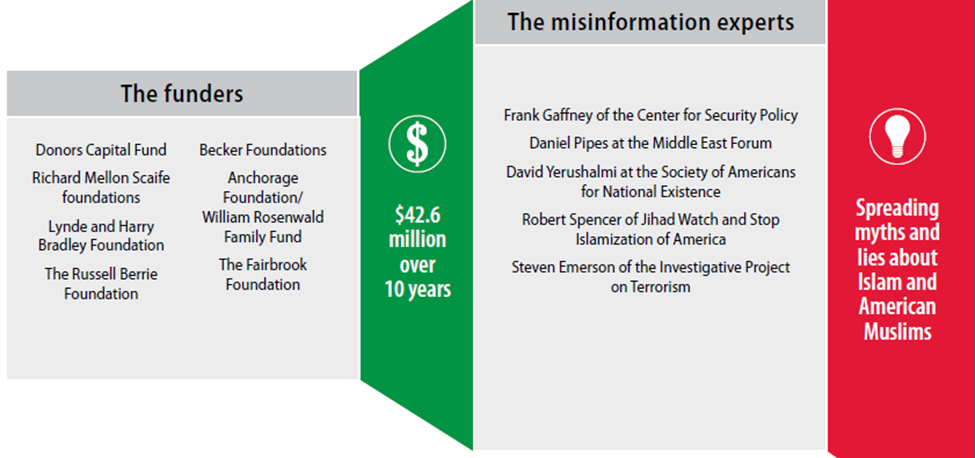
According to a recent report and investigation by the Center for American Progress (CAP), Fear Inc. is a $57 million fund network acting with the goal of spreading Islamophobia and hatred against Muslim minorities. It makes money out of what CAP describes as a “hate” business. A number of American Muslim organizations formed a coalition to launch what they described as a Muslim lobby to counter the increasing influence of Islamophobia.
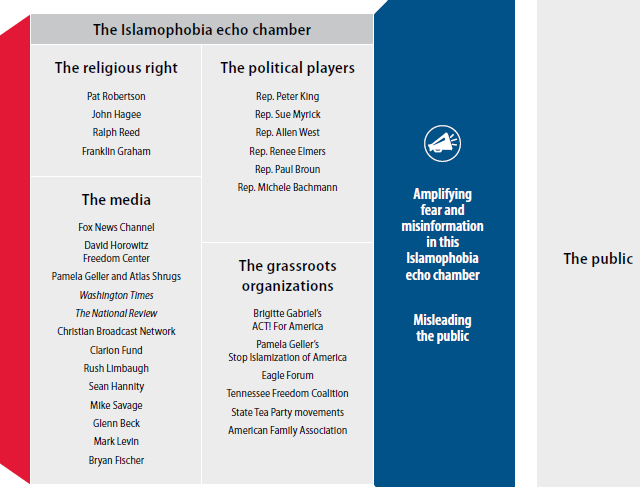
The network funds misinformation from the so-called experts, who exploit a larger network of politicians, media outlets and organizations. “The name Fear Inc. is an analogy [to suggest] that a relative small group of people are pushing [towards] these ideas. They are similar to a corporation because they are making large amounts of money [by] spreading hateful messages,” said Ken Gude, senior fellow with the national security team at CAP and a member of the crew who developed Fear Inc. reports.
Fear Inc. funders pump millions to misinformation experts to spread Islamophobia
Misinformation experts with the echo chamber amplify the Islamophobia to the public and mislead them.
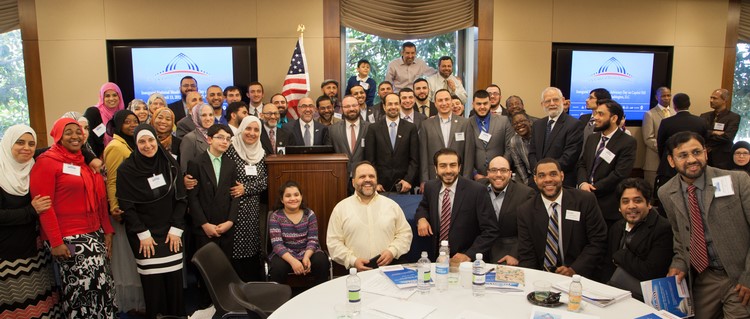
A coalition of leading national and local American Muslim organizations coalesced to form a Muslim lobby, also known as The US Council of Muslim Organizations (USCMO). USCMO hosted the first National Muslim Advocacy Day in Capitol Hill in Washington, D.C. on April 13, 2015. However, still at its inception, the Muslim lobby faces significant challenges in reaching media, and influencing legislation.
USCMO hosted the first National Muslim Advocacy Day in Capitol Hill in Washington, D.C. on April 13, 2015
Media
One of the main goals of the Muslim lobby is to pushback against the daily stereotyping of Muslims in the media. Moustafa Elhusseiny, broadcaster in Al Jazeera network, expressed his frustration with prevalent stereotypes of Muslims and Arabs, saying: “Americans who do not have Muslims in their social circles, carry the stereotype of the Muslim as a terrorist, and an Arab as a potential threat. Some people cringe when they hear my name!”
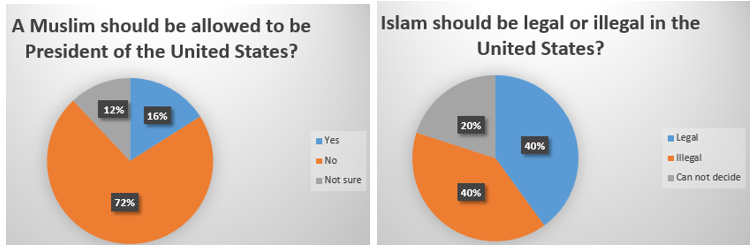
The Fear Inc. and Islamophobia can be demonstrated by the following polls that were conducted in September 29, 2015 by the Public Policy Polling in North Carolina.
Gude added that the current Muslim lobby is doing well, but it is not enough. There is a need of more organizations to spread out. Anyone who is counterattacking the Islamophobia should focus on having more communication with the media and the reporters covering the presidential campaigns. For example, on Trump’s campaign, the media focused most on “Obama is Muslim” as a smear. It is a smear but the response should not have been directed to that only. The response should have been to push back on the whole notion. The media should get educated on how to talk about such issues.
As a reaction to Ben Carson’s Islamophobic attacks during his presidential campaign, Mike Ghouse co-founded the American Muslim Institution. “Bigoted people might not change their minds but when we talk in media on a daily basis, stand out and respond. This push back will make them hesitate to say any false statement again. After two or three years, they will not do it”, said Ghouse.
Education and Social diffusion
The Muslim lobby is faced with several challenges on both the Muslim and non-Muslim fronts. On the one hand, very few American Muslims know about the new coalition. “The Muslim community in the Unites States is self-enclosed. Even the organizations and Sheiks do not show up in the advocacy and human rights events. They neither interact with the American society nor support any persecuted minority groups from Latinos, and Blacks,” Elhusseiny said.
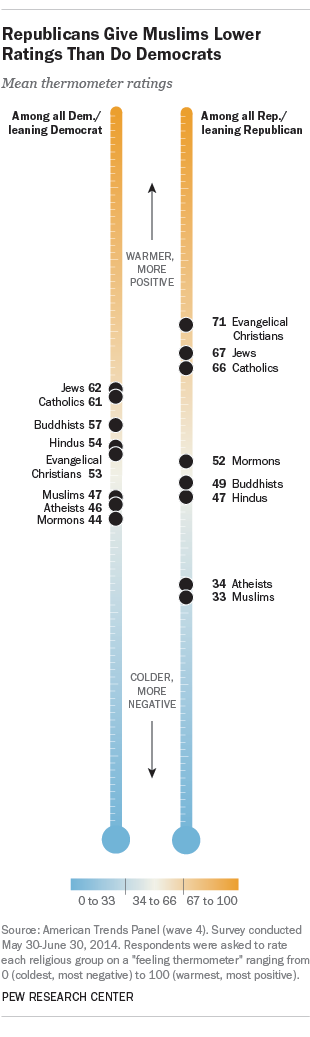
On the other hand, the wider public still harbors significant prejudices against Islam and Muslims. In 2014, the Pew Research Center conducted a survey about positive thinking towards Muslims; Republicans ratings were 33%, and Democrats ratings were 47%.
The FBI crime rate reported on their website stated that the Anti-Muslim cases has slightly increased from 2012 to 2014. The Southern Poverty Law Center stated that the Islamophobia in the United States goes into overdrive following France attacks. In 2015, crimes such as Chapel Hill shooting, the discrimination incidents such as Ahmed Mohamed’s arrest in Dallas, and the latest anti-Muslim statements made by the Republican presidential candidates.
“It is highly required to found a new educational organization to train new cadres to represent the Muslims. The education can be done through conferences and workshops,” Hesham El-Meligy, 2013 NYC comptroller candidate, co-founder of Muslims for Liberty (M4L), added.
El-Meligy added that M4L is making conferences to correct people’s misinformation about Islam through the American Constitution. The audience is from the Tea Party. M4L is arranging a conference to counter Carson’s false claims with three of his campaign managers.
El-Meligy and Elhusseiny both emphasized that Muslims should be keener to vote. Muslims’ population should show up in: the voting base, the city council and the senate candidates.
Legislation
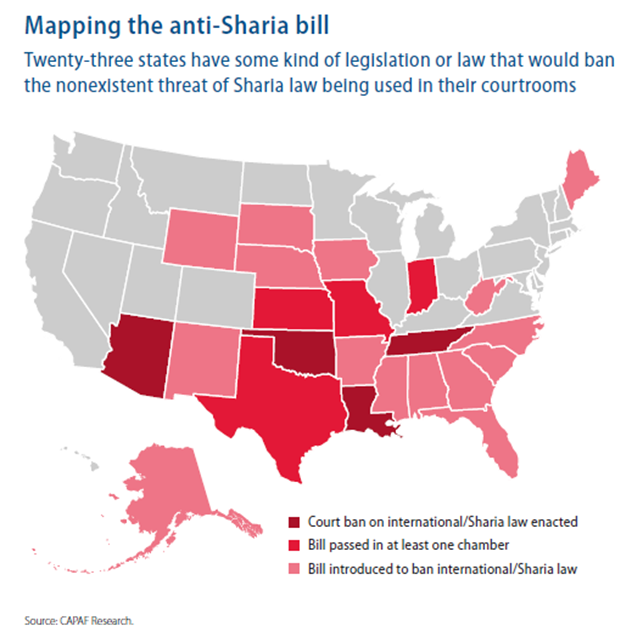
Gude declared that, from the legislative perspective, most of the Muslim organizations are playing defense. None tried to issue a law specific to Muslims, as this is not the target. It should be for all religions not only Muslims. The organizations are mainly concerned to stop the NYPD surveillance programs and the anti-Sharia bill.
Mapping the anti-Sharia bill
USCMO announced on their website that the domestic priorities of the American Muslim community, includes: “Calling on Congress to urge the U.S. Department of Justice to amend its racial profiling guidance for federal law enforcement by removing any existing loopholes that continue to permit profiling in the name of national security, domestic surveillance and policing the border. Many of these programs have disproportionately targeted Latinos, Muslims and other minorities, and raise serious due process concerns.”
Gude declared that stigmatization and training of law enforcement to profile Muslims and monitor every mosque as a counter-terrorism strategy had negative consequences and lead to many false alarms. Moreover, he said that there should be no aligning based on practicing any religion, the society should stand out against Anti-Muslim, Anti-Jew, Anti-Christian, and Anti-Atheist.
Nevertheless, Ghouse added, “Muslims are safe in the United States, it is better than any other country in the world. It is a good country, it supports free speech and I am blessed to be here.”
Gude concluded that here is no big Fear Inc. report yet, but they intend to monitor and comment on the direction of the media, shed some light on respectful Muslims to recognize them and push back the Islamophobia during the presidential campaign. Probably they will produce shorter videos to combat the negative Muslims’ stereotyping.
Acknowledgement: Thanks to Yomna Ali and Michael Fitzgerald for their editing.
بما اني أسوأ واحدة في الدنيا في التعامل مع الفلوس و الماليات و العك ده. أنا حرفيا بكره الفلوس. قررت اني مخليش بنتي تطلع زيي.
الرابط ده عبارة عن لعب تعليمية للأطفال بالسن لفهم مبادئ المال و الاستثمار و الأرباح. مبدأ هام جدا لا ييعرفه الكثير منا و هو: ادفع لنفسك أولا.
As I am the worst person on earth in financial dealings, money & such stuff. I hate money literally. I decided to not bring up my daughter to be like me. This link is educational games by age for financial head start to understand the concepts of money, investment and profit. A v. important rule that not many of us know is: Pay yourself first.
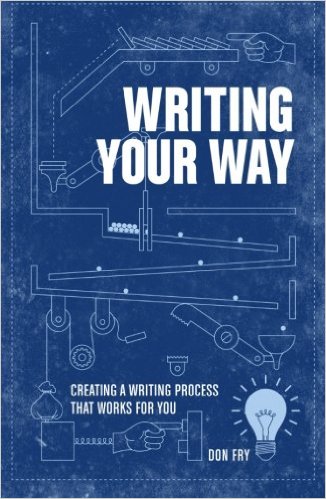
Reading Don Fry’s book “Writing your Way”, while writing the last feature piece was really useful to put all theories in practice in real time. Now, to digest more, I asked myself about my strong areas and weak areas.
Always the first chapters in any writing book are about the ideas, then the interviews. These are in my strong realm, I never run out of ideas nor people.
My real problems start when I start transcribing the interviews and writing the first draft. In Don Fry, he simplified the process to write in blocks, and to add the golden coins. The golden coins can be illustrated as pictures or strong quotes to keep the reader hooked and to push the story forward.
Moreover, I face the problem of how to end the story so the reader can remember it. Fry said that the ending is like a nice frame, that if cut, the story can still stand by itself.
Blundell’s book “The art and craft of feature writing”, answered these two weak points in six part step-by-step guide over two stages. The six parts are: History, scope, reasons, impacts, countermoves, and futures. The two stages are: planning and execution, and organization.
In the planning and execution stage, the step-by-step guide for the six blocks are listed in the book as specific questions for each part. As a summary, it is as follows:
History: has the main theme roots in the past?
Scope: any statistics, and numbers.
Reasons: is there money or personal motives behind the events?
Impacts: who is hurt? And how hard is his hurt? (It reminds me of the quote: what bleeds leads)
Countermoves: who is defending? Who is winning in the story contrary forces?
Futures: opinions of the observers.
In the organization stage, Blundell said that the only way is to index the facts and the interviews according to the 6-blocks mentioned above. He decomposed any feature story to the following stages:
One: Tease me, you devil.
Two: Tell me what you’re up to.
Three: Oh yeah?
Four: I’ll buy it. Help me remember it.
Hmm…this quote is quite true: “Writing is easy. You just open a vein and bleed.”
#NobelPrize #Parenting (English translation below)
والدي العزيز رحمة الله عليه كان دائما يجعلنا نشاهد الحفل ان أمكن و نقرأ عن هؤلاء العلماء و أسباب نيلهم الجائزة. في الوقت الذي كانت حواديت قبل النوم لكل صديقاتي -لو كان فيه- عن الأميرات و الأمراء الذين يتزوجوا ليعشوا في تبات و نبات و يخلفوا صبيان و بنات، كان والدي رحمة الله عليه يحكي لي عن سميرة موسي و كيف تم اغتيالها و أنه يتمني لو أكملت مسيرتها حين أكبر، عن ماري كوري و عبقريتها و غيرهن.
من المهم للأباء أن يكون عندهم القدوة و الاستراتيجية في تربية الأولاد، ربما الأولاد لن يحققوا أحلام الأباء. لكن لابد أن يتمني الأباء أن يصبح أولادهم أشخاص عظماء و يغرسوا ذلك بداخلهم ويريهم أمثلة حية يسيروا علي خطاها.
My dear Dad-May Allah bless his soul- always made us watch the Nobel Prize ceremony if possible. He used to get us all information, he can find about them and about their achievements. While my friends’ bed time stories were about princess & princes, getting married & live happily ever after, my dad was telling me about Samira Mousa & her assassination. He wished if I could complete her dream. He was telling me about Marie Curie, her genius & many other genius ladies.
It is important to have a strategic plan for our kids and to dream of their glorious future. May be they won’t fulfill our dreams but it is our duty to instill in them the desire to be glorious. It is our duty to show them such real examples to follow their foot steps.
Fighting my internal critic and my mind over the gig selection
Finally, I have finished reading Don Fry’s book “Writing Your Way.” I like most the last chapter, where he collected all the book’s techniques. I feel that I want to re-read it again and want to re-write all my stories again, upon what I learned from the book. My internal critic is so loud right now yelling at me, “Do not pitch, you are not ready yet. Work on knowing yourself. You need more time to investigate your strengths and weaknesses.” But I can never know without trying.
Other than fighting with my internal critic, I am fighting my mind on the gig selection. It is like questioning myself: “Which cage do I like most, in order to lock my mind in it?” I get bored fast, nevertheless, I know that hopping around will not help me earn any money.
I know that there are shortage in journalists; who write about Muslims in America. According to my blogs’ analytics, the readers like most what I write about politics, travel, parenting and book reviews respectively.
I think I should start collecting newspapers’ writing guidelines and ask my social media about which of my writings they like most. May be talking with people, helps me decide.
There is a controversy over the strategy of communication between Muslims and the United States government. Some call for having a united voice for Muslims under one umbrella representing them. This organization talks on their behalf, hoping that this unity causes a high prominence. Others call for founding more organizations. Each has its strategy, and its voice, so the impact magnifies.
Moustafa Elhusseiny, broadcaster in AlJazeera Network, is supporting the unity. He said that they need an entity to direct their movement and opinion. “This will cause Muslims to be a mobile critical mass. Thus have an impact on the legislation like the AIPAC (American Israel Public Affairs Committee).”
Ken Gude, senior fellow with the national security team at American Progress, supports the other opinion. He said, “Muslims is a diverse community. They need many organizations reflecting that, representing each sector and consolidating each other.”
Mike Ghouse, founder of the American Muslim Institution, agrees with Gude’s opinion. He said that Muslims in the United States are: Sunni, Shi’a, Ahmadiyya, and others. So it is so difficult to have one organization representing all. This is a Muslim problem not an American problem. They have to always seek and stay on a common ground.
My younger brother was curios about fire. While exploring fire by himself,
the car caught fire while he was locked inside!
Do not kill curiosity but stay safe! Kids’ curiosity about fire
It is never easy for a parent to allow his kids to indulge their dangerous curiosities before his eyes. Every parent feels that his responsibility is to overhaul his kids’ behavior and to protect them from any harm. My Dad had the same goals but he applied them in an unusual way. When he found us so curious about exploring something lethal, like fire, he urged us to do it in front of him and under his supervision. His goal was to be ready to protect us and save our lives without killing our drive to explore, nor killing ourselves.
“One of the horrors of the writer’s life is sitting at your keyboard not knowing what to say,” this sentence hooked me, this is exactly how I feel every time I have to write!
Don Fry in “Writing Your Way,” analyzes the writers, classifies them and guides each type. Fry is a writing coach, a writing teacher and a freelancer writer. He aimed the book at nonfiction writers who are not journalists.
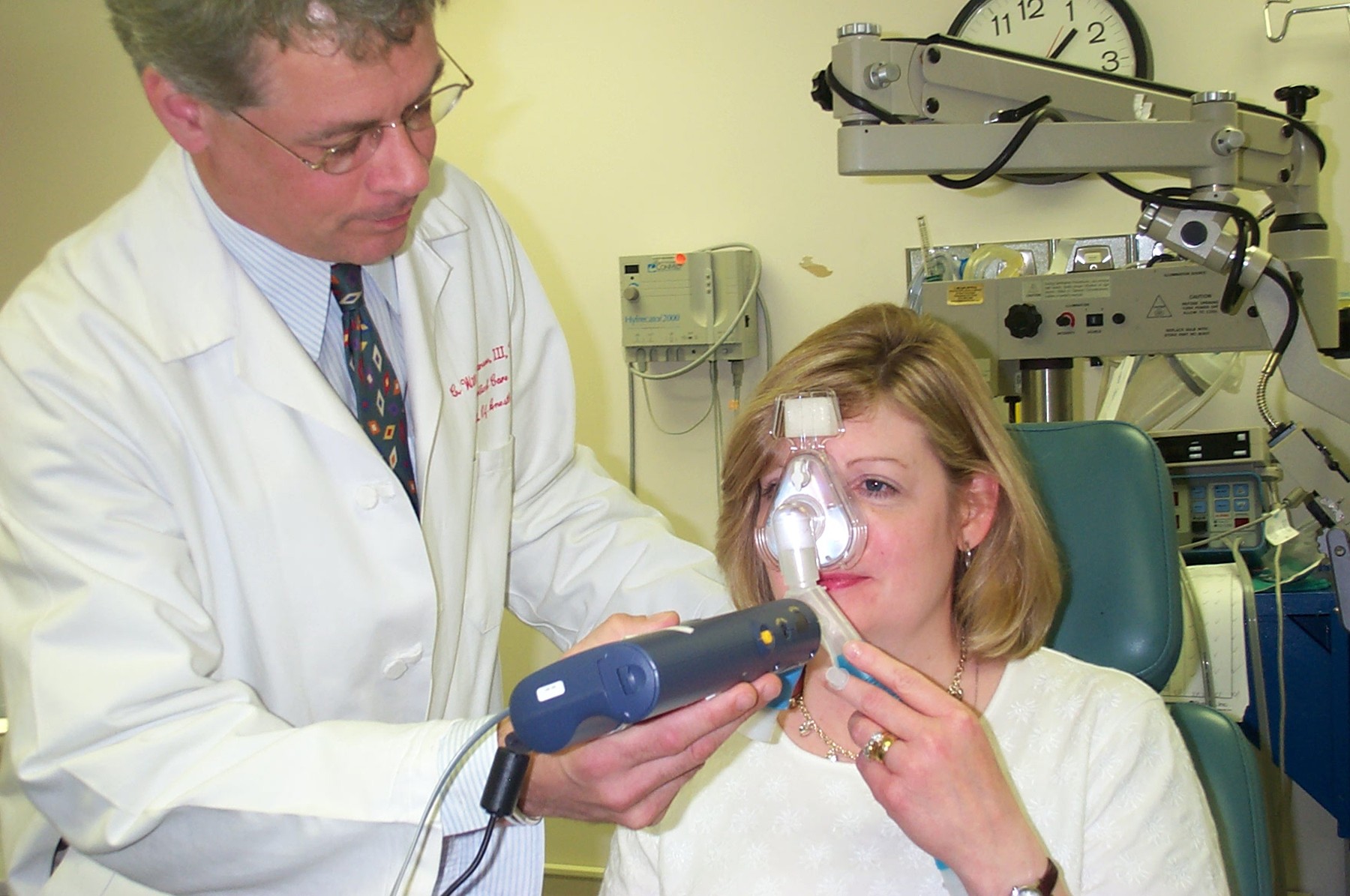
This is how the gases is collected for the e-nose nowadays. (*)
E-nose to detect the lung cancer from the breath
By Engy Fouda
Master’s student’s ultimate goal is using the electronic nose (e-nose) to analyze the patient’s breath for early lung cancer detection. He is investigating the e-nose usage for different applications as pre-steps to reach his goal. He believes that the e-nose is the fastest detection method for lung cancer.
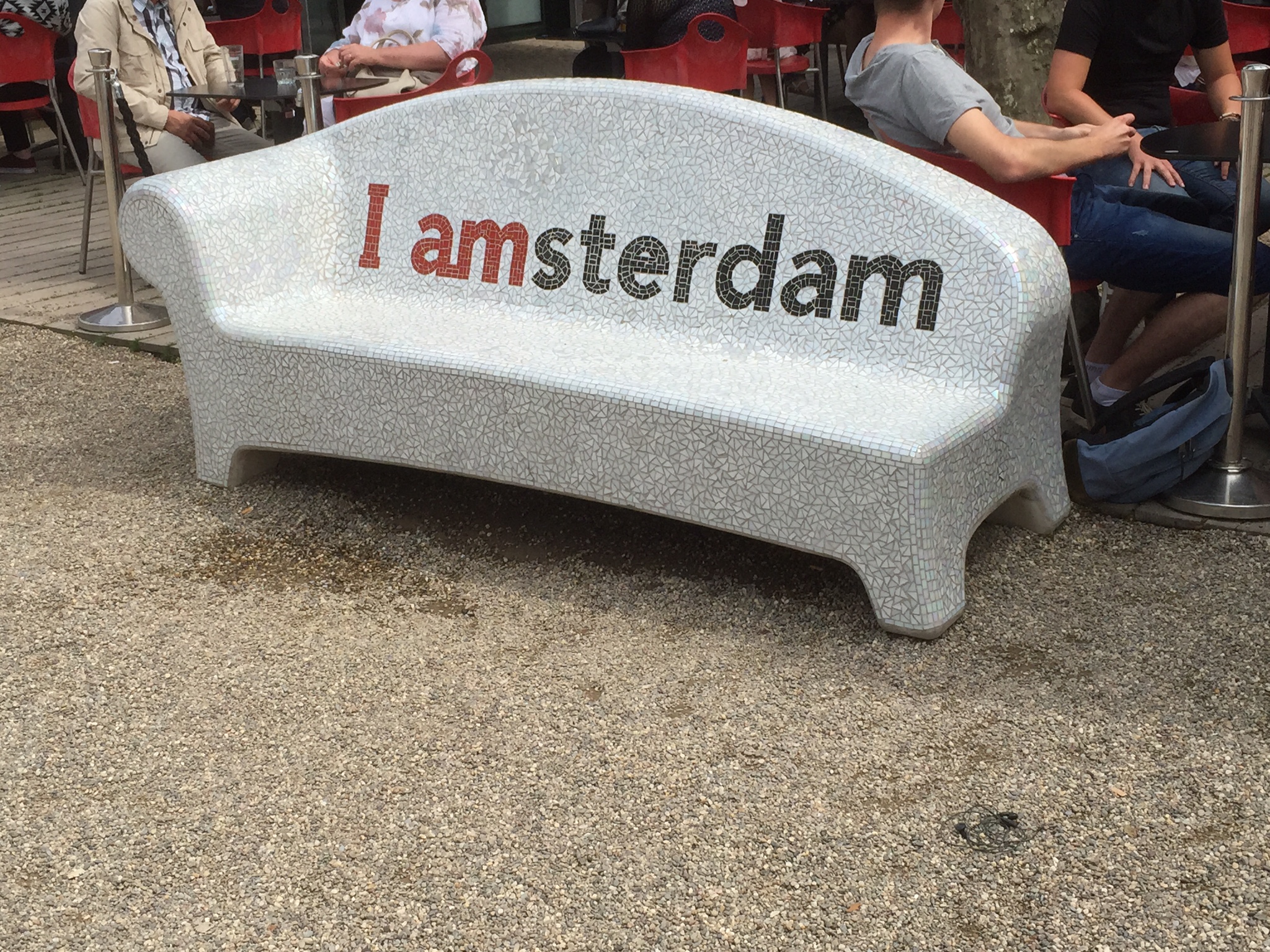
I visited Amsterdam in 2003 and again in 2015, the difference is huge. My first visit was really horrible, I almost lost my camera by pick-pocketing and was shocked by the drugs and nudity. The city entirely changed after those 12 years, it is way more family friendly and much safer than before.
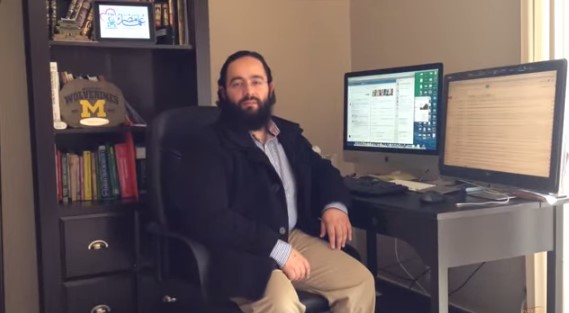
Dr. Khaled Alashmouny talking about Egypt Scholars Inc., having its logo in Arabic on the shelf behind him.
When Khaled Alashmouny was 10 years old, he used to fix burned AC fuse by twisting 3 filaments of a copper wire and inserting them instead of the fuse to get the AC working again. A couple years later he was electrically shocked many times while playing: “disassembly the refrigerator” to make some measurements with his new toy “multi-meter.”
Alashmouny, today an Analog Integrated Circuit Designer in Apple, is no longer simply twisting copper wire. He holds Ph.D. from Michigan University, is working on the development of future Apple mobile devices. Before joining Apple, he registered several patents and published several papers related to recording and analyzing brain neural signals to detect the sleep apnea syndrome.
Alashmouny said that his greatest contribution though is as the force behind the prevailing scientific and technological online hub represented in a non-profit organization called Egypt Scholars (ES) Inc. The Egyptian revolution demonstrated how networking people through social media can change the world face politically. It inspired him to embark a new scientific and technical volunteering initiative. After discussions with a small group of graduate students and professionals living in different parts of the world, they collaborated to set up ES as a new ecosystem with slogan: “Every Mind makes a Difference.”
”The one must work on something that prosper not during his life but extends its benefits after his lifetime,” Alashmouny said.
They started with a Facebook page then a wiki-site then currently a complete online platform. “We surmounted the limits of the limits,” Dr. Amjad Abu Jbara, Applied Scientist in Microsoft and ES Board Member said.
Alashmouny’s slow venerable talking, sometimes using classic Arabic Language, conceals his enormous energy, Abu Jbara said. “He is a people magnet, energy generator and dynamo,” he added.
Egypt Scholars is not Alashmouny’s first experience in volunteering and gathering people to give sessions and share research experience. In 2010, he was the chair for engineering symposium in University in Michigan, the university awarded him “College of Engineering Distinguished Leadership Award,” for his exceptional contributions.
“He is very persistent, very diligent and always know how to find time,” Dr. Ahmed Hassan, Researcher in Microsoft Research and ES Board member said. ES should focus on more precise goals in 2015, “When there is a far away goal, you run in too many directions wishing any get you closer to your dream,” he added.
Alashmouny was an apathetic teenager, until a day he got sick and his doctor sarcastically remarked on that attitude but his mother zealously strove to vindicate his behavior. “It was a turning point in my life, when I found my Mom thinks that well of me, I reclaimed, to not let her down,” said Alashmouny.
“He has immense passion and his ambition sometimes exceed what all of us as volunteers can afford!” Dr. Abdelrehim Ahmed, Researcher in Microsoft and ES pioneer member said. Dr. Ahmed concurred that currently, empowering the students and teaching them how to make research and how to apply for Masters and Ph.D. degrees abroad are the most important tasks for ES.
Alashmouny envisions Egypt regaining its position as a cornerstone center for excellence in modern sciences, high-tech industries and entrepreneurship. “I learned that the one should develop and invest in the people not the land.”
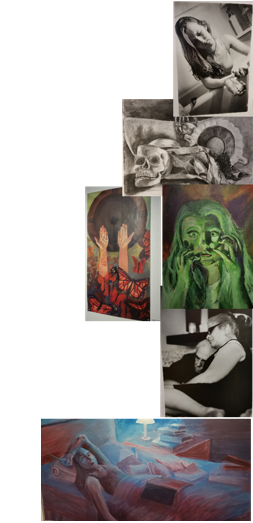
A photograph of a girl committing suicide by cutting her wrist and blood leaking, skeletons, empty roads and zombies, were some of the art pieces on the exhibit at Teen Visions ’15 in Vassar College in Poughkeepsie.
Each piece was a psychological story bleeding in paintings, drawings, and photographs.
The exhibition had more than 60 pieces created by local high school students, who participated in the Art Institute Summer Art Intensive Program.
Most of the pieces were scary and murky; having bones, old bald trees, and vague stairs. Nevertheless, some pieces were different like “Dream & Reality” piece, it had raised hands with big wall clock in the background and butterflies in hot colors.
“Art is therapy!” Todd Poteet, Director of the Art Institute said. He added that art was an outlet for the kids to get out what they were raving about inside. Art helped these kids healing by talking about the suffering and expressing themselves their own way in their art.
As for the suicide piece, he said, “A happy kid made it. Many of her friends committed suicide, which hurt her so much and she wanted to leave something talking about it.”
“Art for Healing Program” is one of the specialized programs that the Art Institute afford. It is a collaboration program with hospitals. It helped kids and patients who suffered from chronological diseases like Cancer and Alzheimer. “Art eases discomfort and painful treatments. Hospitals found that patients who joined the art program healed faster than others. Showing the patients what they drew, enhanced their memory,” added Poteet.
“They do not see light in future that is why it is dark. Usually there are breakdowns in class,” he said that this was the reason behind having many pieces in black and white and without colors.
Madison Wetzell, a student in Vassar college said, “this exhibition reminded me of how to be a teenager: Dark…not much happens really in life while lot of emotions and hopes only. “
She answered that the painting of the girl studying in bed was the piece which she liked most. She smiled and explained that it represented her life.
The mother is the best teacher for her baby, no matter her education level; she is a customized teacher that just fits her baby’s needs. I always read that the key difference between a good teacher and the best teacher is how your students feel about you. If they really love you, they take you a role model, and will never forget you, moreover, they will always repeat your words, quote your words, and imitate your actions. What about your baby, she by birth loves you and you love her ultimately.
When I knew that I was pregnant, I was so much concerned with:
How to have a healthy baby (good references for this are the book series: “What do you expect”; i.e. What do you expect when you are expecting, What do you expect in the first year, and What do you expect in the toddler years)
Then when Areej (my daughter) was 5 months I watched a video of little girl of 1 year old, can read and makes some v. hard gym actions. Then I knew that there are programs on how to teach your baby many different skills to be nearly genius. Frankly, at first I never imagined that those programs would work with my daughter and those kids are really geniuses but I tried them & Thank God they worked, & told many of my friends about them & they worked with all of them, too.
Actually those which I have tried with Areej but there are others like: How to teach your baby math, encyclopedic knowledge,…etc. I shall explain more some of the above points in more detail.
NOTE: 2 important notes:
Do not to overload yourself or your baby or stress yourself, you just do what you can and stop when you or your baby are tired, these programs relies on making learning as plays and games that both of you enjoy, thus if you don’t then simply stop.
Do not get upset if the results didn’t show instantly, you may feel that you are just exerting a lot of energy, money, and time in vain and your baby is not showing that she is learning anything but trust me suddenly she will surprise you and you will find that she learned everything you were trying to teach her.
How to increase baby intelligence
While she is in the womb, you can communicate with your baby through talking, yeah nice listening phase:
I used to read for her Quran daily, and then when she was born she used to soothe and sometimes sleep while hearing me reading Quran.
There are Mozart symphonies especially for the babies in the womb, it soothes them and enhances their taste of music later when they are born.
Talk to her, may be she can not understand but she feels that you really do care about her and feels that this conversation is directed to her. On later months of pregnancy my baby used to respond to me by kicking, I was feeling that she understood that I talk to her and just got excitedJ, this was really interesting and joyful.
Respond to your baby’s kicking by pressing gently back on the belly spot where she kicked, this is one way of conversation, she will feel this press. It is like you are telling her, “yes sweetie, I heard you and felt you, I am here for you any time”.
Eat lentils, beans, peas,…etc., they increase the baby’s intelligence and prevent the magnolia case. But not too much to not hurt the colon.
After the baby is born and during her first year:
Try to stimulate her by the strong colorful toys (i.e. red) to enhance her vision.
Continue talking to her, this soothes her because it is the same voice she used to here while she was in the womb.
I used to read Quran to her still.
There are Mozart symphonies for first year.
Put her a lot on her belly while she is awake on the floor surrounded with toys and rattles that make sounds and move but make her sleep on her back.
there are physical plays that you can play with her, like sleeping on your back & putting her on her legs with holding her with your hands then raise your legs, she will find herself flying in the air, WOW they really will love it. you can find sorted by age on : www.babycenter.com and www.brillbaby.com
How to raise a happy baby
Oh, I was always concerned about this. As long as you respond to your baby’s needs and she feels that you are around and that you love her then she will be happy. Many times I found Areej crying and didn’t know the reason, then me and her father figured out this checklist to check her so fast and satisfy her:
Check her diaper.
Check her temperature, if she is hot or cold.
I used to write down the time and the duration of lactation (it was required by her doctor), thus check if 2 hours has passed then probably she is hungry.
If the above list are all fulfilled, then probably she is crying because she is bored and missed you, give her a hug, kiss her , talk to her, hold her a little then put her back on her belly and sit with her to play together.
How to teach your baby to read
There are two schools in that: Dr. Doman’s and Dr. Titzer’s. Both agreed that the baby can read even before hi can speaks, thus both used to expose the children to words at very early age starting from 3 or 4 mnths old only, and both ways worked with hundreds of kids.
Dr. Doman relies on using flashcards, he claims that every child is naturally smart, and we the parents who knows how to stimulate this or the baby will just lose his natural intelligence. He also claims that every baby can memorize about 25 different words every 5 days.
Dr. Titzer actually used a more interesting way in teaching reading, he used multimedia. He made video presentation showing every word at first then a song or a baby or child making the word or expressing it –if it is a feeling-, like happy or sad or crying. But still he used the flashcards accompanying every CD having pictures with them.
I tried both ways, actually Dr. Titzer’s was more entertaining, furthermore, I felt that she understand really the meaning of the word not only memorizes its shape.
I’m trying to make her memorize Quran in this same way, I made her powerpoint presentation having the verses with moving arrows showing how the direction of reading the words, accompanied whether with my voice or el Shekh ElHosary Voice with children. It is free and available for download.
By the way Dr. Titzer has put a sample demo of his CD’s online that you can try it and take as a template for your presentations. In fact, I was lazy in making her other presentations; I made her 3 or 4 only having the words, then picture, then a video of her doing this word or with this object if available. She used to be more interested in holding the flashcard herself then of course taste it or bend it or tear it than concentrating in what I was saying, thus computer powerpoint presentation worked much better with her. Now I buy her books that have pictures and a word naming it & try to read it for her.
May be because I am currently living in a no Muslim country, I was concerned about that, I looked for many books discussing this important topic but they only concentrate on 3 principles:
Read Quran a lot for the baby and the kid.
Tell the messengers’ stories and Sunna stories before sleeping or for soothing and playtime
Be a role model
I found none that gives a detailed practical one up till now but I found a nice series online not books that ris really interesting and has new practical information, you can find it on: http://www.yassernasr.com/sound.php?do=show_sub&IDS=10
Finally, I would like to ensure that the most important thing is to give your child care and love; this will enhance her confidence, ego and overall personality in the future. May Allah keep all our children from any harm, satin, and even from their self badness. For the record, I could not follow every single step mentioned in the above sites or books, I am doing my best and still searching for how to be a good mother and bring up a good children, God help us all in such tough task.
I would like to thank BronTrainer site to give a window to share such topics with you, I wish they were useful.
I have always been in the dilemma of which microcontroller to choose and work on, on the previous courses or projects I worked on, my supervisor used to take that decision for me to leave me the challenge of getting it working.
But now I’ll start my project that has certain limitations; I want to choose the easier cheaper & most suitable microcontroller this time that fits that project, I decided to dig it hard and I thought about sharing this information and document my trip between the different types and brands, may be it will be useful to someone else who stands in my current position, or to me later when I get older and suffer from memory loss ;- ).
If you want a brief introduction to microcontroller, here is this link:
I plan to make a comparison of these different augmented boards later to help in the beginner projects, and for me I do it to end this hassle every time I decide to teach the course of introduction to microcontrollers, please follow the posts.
Now I’ll compare between the microcontrollers themselves, the larges two names in the market nowadays are PIC and ATMEL.
I searched a lot for the differences between them, downloaded a lot of datasheets and finally of course visited some forums that discussed this topic.
To summarize what I found on the forums, simply I found that everybody is saying that there is not a huge real difference in the capabilities, ATMEL is cheaper, easier, has lot of free debuggers, or purchasing $50 Dragon, while PIC is more expensive.
for more details & following up the discussions here you are the forums:
Please take in consideration, that the comparison I’ll do won’t take the programming language in consideration because I know all of them, I know C/C++, Assembly, Java, Visual Basic,..etc.
I’ll mainly concentrate on the I/O no. and memory required because of my current project.
My current project has 3 main limitations:
1. Large I/O pins, about 400 pins!!
2. Large Memory required about 4MB; this is large to a microcontroller!!
3.Power consumbtion.
Of course I’ll use many microcontroller chips; the design will have them cascaded; some working in parallel and other in sequence.
No need for AD as all IO are already digital but may be I’ll make use of the interrupts pins.
For the above limitations, of course I can’t use any augmented boards, many of their features will be useless, and moreover they will decrease my IO & memory which I need so hard.
Now I’ll start digging the features and different types of ATMEL.
OK, in fact there are many other microcontrollers, like Motorolla, let’s have af further deeper look at it in the next post ISA and compare it to PIC and ATMEL.